
LTPAC HIT Collaborative Urges ASTP/ONC to Protect Vulnerable Populations in HTI-5 Rulemaking
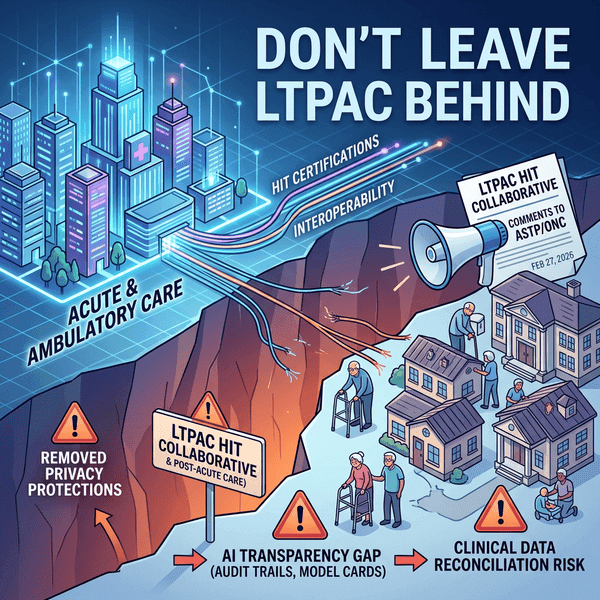
The LTPAC HIT Collaborative submitted formal comments on February 27, 2026, responding to ASTP/ONC's proposed HTI-5 deregulatory rule. While we strongly support efforts to reduce regulatory burden and advance FHIR-based interoperability, our comments raise significant concerns. The proposed removals of several items — including privacy and security certification criteria, clinical information reconciliation requirements, and patient engagement features — could disproportionately harm LTPAC providers and the vulnerable older adults they serve.
Among our most urgent concerns: the removal of audit trail and AI model card requirements creates a dangerous transparency gap. This happens just as AI-enabled decision support tools — for fall risk, sepsis detection, and hospice eligibility — are being deployed in nursing homes and home health settings. Without these safeguards in place, providers cannot distinguish bot-generated entries from clinician documentation or protect residents from the downstream consequences of inaccurate or inaccessible clinical information. We also raised serious concerns about proposed “Third Party Seeking Modification” provisions that could allow RPA-driven automated agents to alter patient records without provider-supervised authorization.
LTPAC providers are ready to be full participants in healthcare innovation — and a national health IT strategy that leaves behind the sector caring for America's most medically complex population cannot achieve sustainable, equitable, or fiscally sound outcomes for any of us.
Our recommendations to ASTP/ONC were extensive and detailed. They can be read in the full comment letter available at the link below.
